
Review · ITALY AQUARIUMS
Aquarium of Cattolica Entry Ticket
Start with sharks, then wander into a 1930s ship. The Aquarium of Cattolica turns a former marine colony into a full day of sea life, reptiles, insects, and seasonal dinosaurs. I like the four color-coded routes, which make a large attraction easy to follow, and I like the close look at bull sharks, Humboldt penguins, otters, rays, and jellyfish. The main drawback is that the aquarium is self-guided, so you may want to read the displays carefully if you want more scientific explanation.
At $25 per person, this is good value for families who will stay several hours and use the full ticket. The penguins are a likely favorite, and the feeding sessions add useful structure to your visit. Keep one practical detail in mind: tickets are valid the day after purchase, not on the day you buy them.
Key things to know before you go
- Four routes, four types of wildlife: Blue covers marine life, Yellow follows river habitats, Green is the reptile house, and Purple presents Giant Insects XXL Edition.
- The aquarium holds about 3,000 specimens: You can see around 400 species, including bull sharks, penguins, otters, alligators, rays, jellyfish, snakes, and turtles.
- Feeding sessions give the day a schedule: Check the daily timing for bull sharks, penguins, otters, and stingrays when you arrive.
- The building is part of the experience: The aquarium occupies a former 1930s marine colony designed with ship-like forms.
- Summer can add a prehistoric stop: The World of Dinosaurs includes life-size-style dinosaur models and a shaded fossil excavation area for children.
- The attraction is family-friendly but not only for young children: The enlarged insect models and animal exhibits also give adults plenty to examine.
Entering Cattolica’s former marine colony
The Aquarium of Cattolica sits at Piazzale delle Nazioni, 1A, in Cattolica, Emilia-Romagna. Its setting is unusual. This is not a modern glass box built only for exhibits. The aquarium occupies a former marine colony from the 1930s, with architecture shaped to recall a fleet of ships.
That design gives your visit a sense of place before you see the first animal. You are entering a building with an older connection to the Adriatic and to seaside institutions. For families, the ship-like forms add a little drama. For adults, the architecture offers a reminder that Italian coastal towns often reuse historic buildings in practical ways.
The ticket gives skip-the-line entry, which matters most on busy days. You receive access for one day, but you need to buy it at least one day before your intended visit because the ticket is valid the day after purchase. Do not leave the purchase until the morning if you plan to go immediately.
A full visit can comfortably occupy much of the day, especially if you stop for feeding sessions, lunch, and the extra routes. You can move through the four indoor areas at your own pace rather than follow a fixed tour group.
More Aquarium Entry Tickets in Italy:
- Genoa: Aquarium of Genoa Entry Ticket
★ 4.5 · 10,075 reviews - Gardaland SEA LIFE Aquarium: Open Date Entry Ticket
★ 4.1 · 728 reviews - Genoa: Aquarium & Christopher Columbus’ House Entry Tickets
★ 4.4 · 258 reviews
The Blue Route: sharks, penguins, and the Adriatic world
Begin with the Blue Route if you want the strongest first impression. This section focuses on marine environments and contains the aquarium’s most recognizable animals.
The bull sharks are the headline attraction. The aquarium presents some of the largest bull sharks in Italy, giving you a chance to watch a powerful species at close range. Their size and slow movement make the tanks feel serious rather than merely decorative. If you have children with you, this is a good point to explain that sharks are not just movie villains. Their shape, movement, and role in the sea tell a more interesting story.
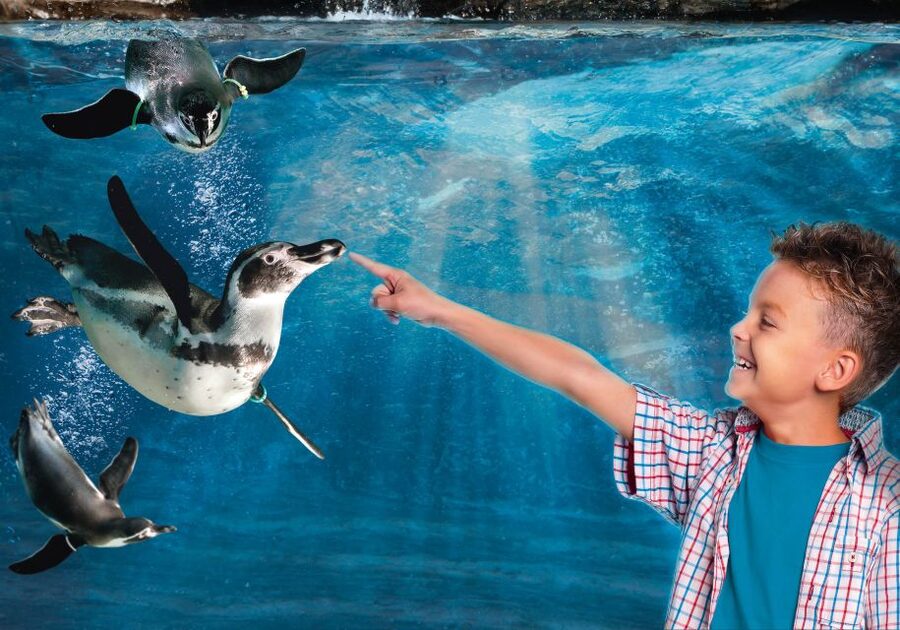
The Humboldt penguin colony brings a very different mood. These birds are compact, active, and easy to watch for several minutes. The penguins have become one of the aquarium’s most popular sights, and their enclosure provides a nice change from the quiet, slow movement of many fish.
Look for the feeding schedule as soon as you arrive. Feeding sessions are offered for bull sharks, penguins, otters, and stingrays. These events give you a reason to return to a favorite enclosure at a particular time, and they help break the day into manageable sections.
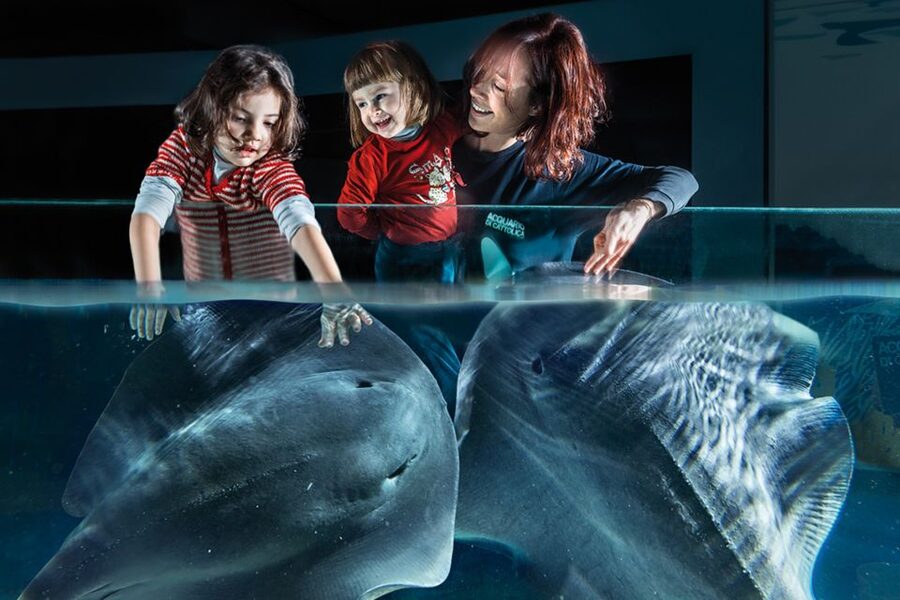
The Blue Route also includes turtles, rays, jellyfish, and other marine animals. Jellyfish are especially rewarding when you pause rather than rush past. Their movement is simple but strangely graceful, and the lighting helps you notice body shape and motion in a way that a quick glance cannot.
The aquarium also addresses the problem of plastic waste in the sea through the Plastifi-niamola area. This section adds a clear environmental message to the animal displays. It is useful because it connects what you see in the tanks with the pressures affecting real marine habitats.
The Yellow Route follows life in rivers
The Yellow Route shifts from saltwater to river environments. This change helps you compare different kinds of aquatic life instead of seeing the aquarium as one long chain of fish tanks.
Alligators, otters, and freshwater species bring a different set of behaviors to watch. Otters are often active and expressive, so you may want to time your visit around their feeding session. The river route also gives you a broader idea of how waterways connect animal life, plants, and human communities.
The route is helpful for families because the change in color and subject gives children a simple way to understand where they are. You can tell them that Blue means marine habitats and Yellow means river habitats, then let them lead the way.
One limitation is that the aquarium does not provide a personal guide with the standard ticket. If you want detailed explanations, you will need to spend time with the written displays or consider one of the special encounters, such as Behind the Scenes. A self-guided visit offers freedom, but it also means the quality of your understanding depends on how carefully you engage with the information.
The Green Route enters the reptile house
The Green Route moves beyond fish and marine mammals into reptiles and other terrestrial animals. Snakes and alligators make this section a useful counterpoint to the Blue and Yellow areas.
The reptile house works well for visitors who enjoy unusual body shapes and survival adaptations. Snakes move differently from mammals, and reptiles invite you to look closely at scales, posture, and stillness. They may not provide the constant action of penguins or otters, but that slower pace is part of the appeal.
For younger children, the Green Route can be exciting and slightly intense. You know your own family best, but it helps to allow time here rather than treating it as a quick passage between the main tanks. The animal variety is one reason the aquarium works as a full-day attraction instead of a short stop.
The Aquarium also offers Extraordinary Encounters, including Behind the Scenes and The Secrets of the Reptile House. These are separate experiences, so check the available options if your family wants a closer or more specialized look. The regular entry ticket gives you access to the reptile route, but not automatically to every special activity.
A few more aquarium days around Italy worth a look
- Genoa: Aquarium of Genoa with Lunch
★ 4.3 · 1,449 reviews - Genoa: World-Famous Aquarium and Lighthouse Combo Ticket
★ 4.2 · 387 reviews - Genoa: Aquarium and FantaCinema Combined Ticket
★ 4.6 · 314 reviews - Genoa: Aquarium of Genoa & City of Children and Youth Ticket
★ 4.5 · 258 reviews
Giant Insects XXL makes small details enormous
The Purple Route is the most unusual section. It presents Giant Insects XXL Edition, an educational exhibition built around more than 70 three-dimensional models and displays.
The models are enlarged from 20 to 200 times. That scale lets you inspect anatomical details that are normally too small to see, including body parts, colors, and functions. You can examine an insect as if it were a large sculpture rather than a tiny creature that disappears under a leaf.
The scientific value of these models has been recognized by universities in Italy and abroad, including institutions in Pisa, Padua, Milan, Taiwan, and the Academy of Natural Sciences of Drexel University. You do not need a science background to enjoy the route. The practical benefit is that children and adults can observe how insects are built without relying on a microscope.
This section may be especially useful for children who are hesitant around live insects. The models remove the fear of sudden movement while keeping the focus on anatomy. It also gives adults a welcome change from the usual aquarium formula of fish, glass, and dim lighting.
Summer’s World of Dinosaurs adds outdoor time
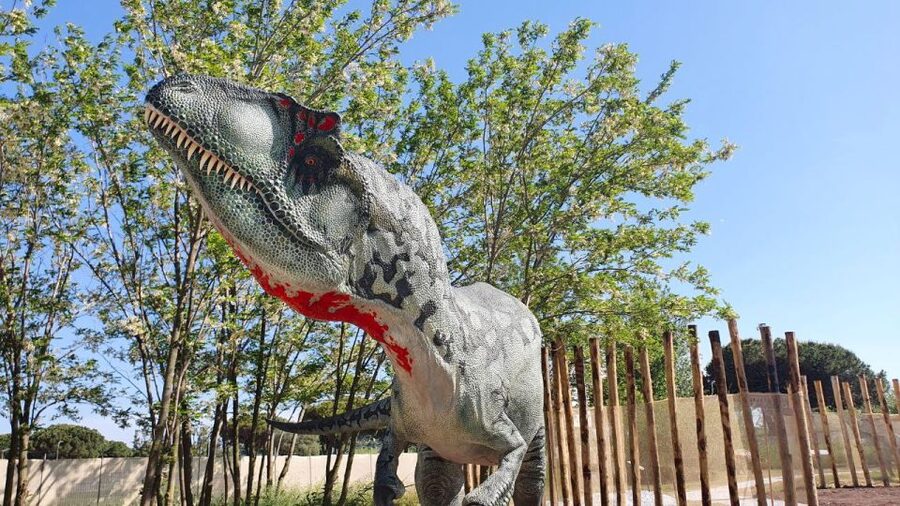
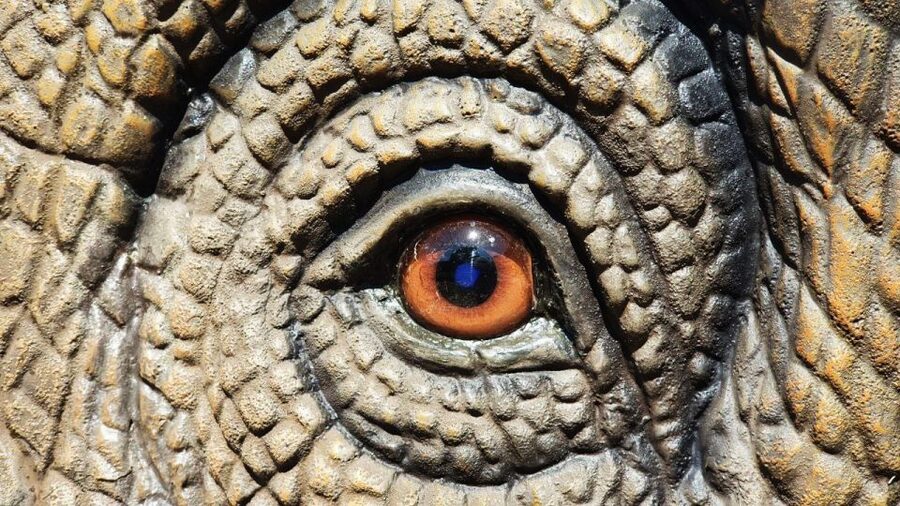
In summer, the ticket includes The World of Dinosaurs, an outdoor area designed as a prehistoric plain. It contains highly realistic reproductions of reptiles that lived around 65 million years ago.
The Tyrannosaurus Rex provides the familiar monster moment, while the crested Spinosaurus gives the display a less predictable centerpiece. At 16 meters long, the Spinosaurus is difficult to miss. The models are built for visual impact, so this part of the visit works well for photographs and for children who need a break from indoor exhibits.
The shaded excavation area is a smart addition. Children can search for prehistoric fossils like young paleontologists, which gives them an activity instead of another row of objects to look at. The shade also matters on hot summer days.
This area is seasonal, so do not assume it will be available at every time of year. The indoor aquarium remains the main attraction, but the dinosaur route adds space, movement, and a different subject for families spending a full day on site.
Interactive details make the aquarium easier for children
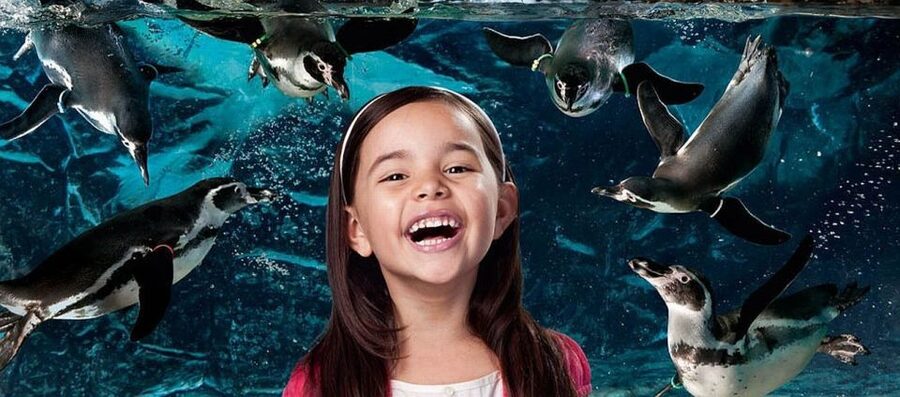
The aquarium does more than place animals behind glass. Several play trails and hands-on elements help children connect with what they are seeing.
In the Footsteps of the Emperor Penguin invites children to retrace the migrations of Antarctic penguins. This sort of activity gives movement to a subject that might otherwise be hard for a young child to understand. Instead of only looking at a penguin, children get a simple way to think about how these birds travel and survive.
The gigantic shark mouth is another playful feature. It turns a fearsome animal into an object that children can approach and inspect. The mangrove grove adds a different setting, showing that marine life is linked to coastal plants and shallow-water habitats.
These features are important because a child’s attention can fade during a long aquarium visit. You can use them as resets between the larger tanks. Adults may appreciate the educational purpose, while children simply appreciate having something to do.
How to plan a full day without rushing
Start by checking the feeding times for bull sharks, penguins, otters, and stingrays. Then choose one or two sessions to build around. You do not need to organize every minute, but a loose plan helps you avoid arriving just after the most interesting activity.
Allow extra time for the Blue Route because it contains the most famous animals and the strongest marine focus. The Yellow and Green Routes deserve more than a quick glance, particularly if you enjoy freshwater life or reptiles. Save the Purple Route for a point when you want a change from live animals.
If you visit in summer, add the dinosaur area after some indoor time. The outdoor setting and shaded excavation area offer a useful change of pace. You can also plan a break at the internal snack bar or at the Pesce Azzurro restaurant outside the aquarium.
Lunch is included only if you choose the ticket option that includes it. At $25 for the basic entry, the value depends on how long you stay. A quick one-hour visit would make the price feel less attractive. A day that includes all four routes, feeding sessions, and the dinosaur area gives you much more for your money.
Who will get the most from the $25 ticket
I would recommend this aquarium most strongly to families with children, animal lovers, and anyone looking for a weather-proof activity in Emilia-Romagna. The large number of species keeps the day varied, and the route colors make it easier for children to follow.
It also suits adults who care about presentation and science. The insect models provide unusual detail, while the plastic waste section adds an environmental point without making the whole visit feel like a lecture.
You may want to reconsider if you prefer a guided experience with constant commentary. The standard visit is self-guided, and one rating specifically praised the variety but noted the lack of guidance for explanations. You can still learn a great deal, but you must read, observe, and manage your own pace.
The attraction is wheelchair accessible. Children’s prices are based on height: select the infant option for children up to 100 centimeters, while the reduced ticket applies from 100 to 140 centimeters. Tickets cannot be canceled or modified, so check the date and height category carefully before purchasing.
Should you book the Aquarium of Cattolica?
Book it if you want a flexible, family-friendly day with more than fish tanks. The bull sharks, Humboldt penguins, otters, feeding sessions, giant insect models, and summer dinosaurs create enough variety to justify the entry price.
I would skip it only if you want a short, fully guided visit or if your schedule allows just a brief stop. For everyone else, the combination of a historic ship-like building, four indoor routes, interactive features, and seasonal outdoor exhibits makes this one of the more useful rainy-day or family stops on the Adriatic coast.
FAQ
Where is the Aquarium of Cattolica?
The aquarium is at Piazzale delle Nazioni, 1A, 47841 Cattolica RN, Italy, in Emilia-Romagna.
How much does admission cost?
The listed price is $25 per person for entry.
How long is the ticket valid?
The ticket is valid for one day. It becomes valid the day after purchase, so it cannot be used on the same day you buy it.
What animals can I see?
The aquarium has about 3,000 specimens from around 400 species, including bull sharks, Humboldt penguins, otters, alligators, rays, jellyfish, snakes, turtles, and other marine and terrestrial animals.
What are the four aquarium routes?
The Blue Route covers marine environments, the Yellow Route covers river environments, the Green Route is the reptile house, and the Purple Route contains the Giant Insects XXL Edition exhibition.
Is the dinosaur area included?
The World of Dinosaurs is included during the summer season. It has dinosaur reproductions, including Tyrannosaurus Rex and a 16-meter Spinosaurus, plus a shaded excavation area for children.
Is lunch included with admission?
Lunch is included only if you select the ticket option that includes it. The aquarium also has an internal snack bar, and the Pesce Azzurro restaurant is outside.
Are tickets refundable or changeable?
No. Tickets cannot be canceled or modified, so check your visit date and ticket category before purchase.
Just added around Italy
- Wine Tasting near the Aquarium of Genoa★ 5.0 · 10 reviews
- Cala Gonone: Cala Gonone Aquarium Entry Ticket★ 4.0 · 226 reviews
- Genoa: Aquarium & Christopher Columbus’ House Entry Tickets★ 4.4 · 258 reviews
- Genoa: Aquarium of Genoa & City of Children and Youth Ticket★ 4.5 · 258 reviews
- Genoa: Aquarium and FantaCinema Combined Ticket★ 4.6 · 314 reviews
- Genoa: World-Famous Aquarium and Lighthouse Combo Ticket★ 4.2 · 387 reviews
- Genoa: Aquarium, Galata Museum and Submarine Entry Tickets★ 4.6 · 190 reviews
- Livorno: Aquarium Entrance Ticket★ 4.2 · 222 reviews
Italy Aquariums, compared.

Genoa: World-Famous Aquarium and Lighthouse Combo Ticket
Read our review →
Genoa: Aquarium and FantaCinema Combined Ticket
Read our review →
Genoa: Aquarium & Christopher Columbus’ House Entry Tickets
Read our review →
Genoa: Aquarium of Genoa & City of Children and Youth Ticket
Read our review →
Browse the lists this tour appears in