
Review · USA AQUARIUMS
Key West Aquarium Admission
Small aquarium, big local focus. At Key West Aquarium, I like the hands-on Touch Tank and the short public talks that connect each animal to Key West waters. I also like the chance to watch shark feedings and touch a juvenile nurse shark. The main drawback is size: you may see everything in 30 to 60 minutes, making the $22.56 admission feel high if you expect a large aquarium.
The aquarium works best as a flexible Old Town stop, not as an all-day attraction. Its friendly educators, repeat presentations, free reentry, and central Mallory Square location make it useful on a rainy afternoon or between sightseeing plans. Still, some exhibits may be limited or under construction, and the overall value depends on how much you use the talks and interactive programs.
Key points at a glance
- Shark feedings run at 11 a.m., 1 p.m., 3 p.m., and 4:30 p.m., giving you four chances to catch the aquarium’s most popular presentation.
- The Touch Tank includes sea stars, urchins, sea cucumbers, conchs, horseshoe crabs, and other local creatures.
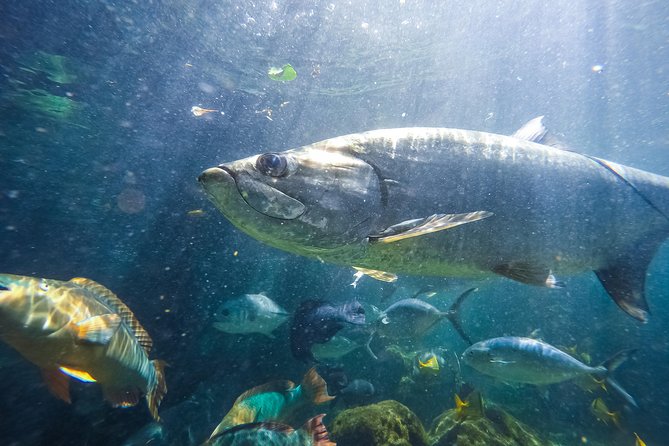
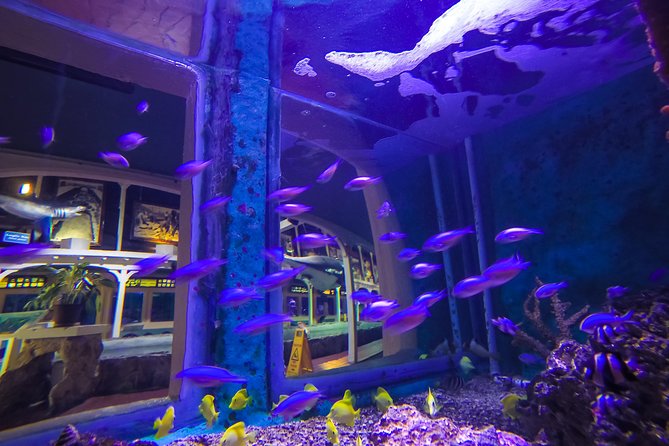
- The 50,000-gallon Atlantic Shores tank recreates a near-shore mangrove habitat with tropical fish, game fish, sharks, and sea turtles.
- Your ticket allows you to leave and return, so you can split the visit around lunch, shopping, or the Mallory Square sunset.
- The aquarium is small, and many people spend about 45 minutes to one hour inside.
- The best value comes from the presentations, especially if you have children or want more than a quick look at fish tanks.
A small aquarium with a strong sense of place
The Key West Aquarium opened as the first open-air aquarium in the United States. That history still shapes the visit. Instead of presenting far-off ocean life as the main attraction, the aquarium focuses on animals found in and around the Florida Keys.
You will see sharks, turtles, stingrays, eels, barracudas, jellyfish, alligators, lobsters, flounder, and many kinds of tropical fish. The displays are meant to show familiar local habitats, especially the shallow coastal waters and mangrove areas that support so much marine life.
I like this local focus. It gives the aquarium a clear purpose, especially for children who may later go kayaking, snorkeling, or swimming in Key West. After seeing a sea cucumber or horseshoe crab in a tank, you may recognize the same animals in the wild.
The building itself is not large. You can walk through the main exhibits quickly, and some visitors find the collection too limited for the price. If you have visited major aquariums in large cities, keep your expectations modest. This is a compact educational stop, not a full-scale marine park.
A few more aquarium days around the USA worth a look
- Atlanta: Georgia Aquarium Skip-the-Box-Office Entry Ticket
★ 4.7 · 3,476 reviews - The Florida Aquarium Ticket
★ 4.6 · 979 reviews - Las Vegas: Shark Reef Aquarium Entry Ticket
★ 4.3 · 892 reviews
Start with the Touch Tank and aquarium history
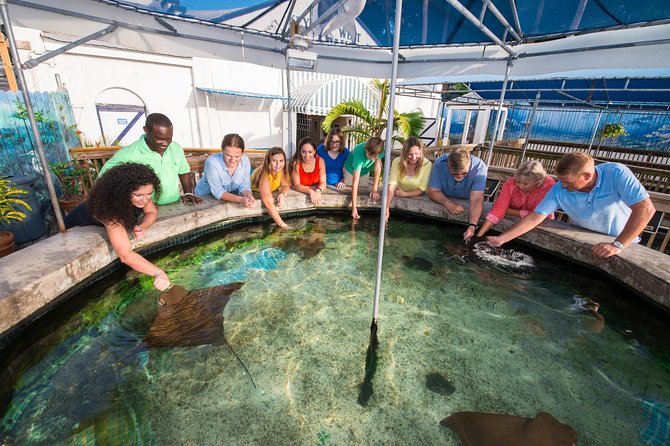
The Touch Tank is the natural first stop for families. You can carefully touch sea stars, slate pencil sea urchins, serpent sea stars, sea cucumbers, giant hermit crabs, conchs, and horseshoe crabs. Staff explain how to handle the animals, so this is not simply a free-for-all with creatures in shallow water.
This section gives the aquarium its most direct form of interaction. Children can connect a real animal with the name and facts they hear, while adults often enjoy the odd shapes and textures. The horseshoe crabs and sea cucumbers tend to be especially memorable because they look unlike the brightly colored fish elsewhere in the building.
The aquarium history talk also fits well here. You learn about the building’s early open-air design and the role of its old frescos. The historic photographs displayed high on the walls add character and give you something to study between presentations.
Plan to attend the talk even if you prefer exploring independently. You are free to walk through on your own, but the short presentations add useful context that the tanks alone cannot provide.
The 50,000-gallon Atlantic Shores tank
The Atlantic Shores Exhibit is the largest feature described at the aquarium. It represents a near-shore mangrove environment, a setting that can seem plain at first glance but is vital to young fish, birds, turtles, and many other species.
The tank holds tropical fish, game fish, sharks, and sea turtles. An interactive feeding session gives you a chance to feed some of the larger fish while learning how the mangrove system supports the surrounding sea.
This is one of the better reasons to stay for a presentation. A big tank is pleasant to look at, but the mangrove explanation helps you understand why these shallow coastal areas matter. Mangroves shelter small marine animals and connect the shoreline to open water.
The feeding activity also gives children a clear focal point. Instead of wandering from tank to tank, they can watch an animal respond to food and ask questions. The exact energy of the session can vary, since animals do not always perform on cue.
Shark feeding times make the schedule matter
The shark presentations take place daily at 11 a.m., 1 p.m., 3 p.m., and 4:30 p.m. If this is your main reason for visiting, build your day around one of those times rather than arriving whenever it happens to suit you.
The presentation explains why sharks matter in local waters and lets you watch a feeding. You may also have the chance to touch the tail of a live juvenile nurse shark. That close contact is a memorable moment, but it is brief and controlled, so do not expect a long hands-on encounter.
The nurse shark pool is a favorite part of the aquarium for good reason. It brings a real animal close enough for you to observe its shape and movement without the distance of a large offshore exhibit.
There is one practical caution: animals do not always cooperate. If sharks stay below the surface, the feeding may be less exciting than expected. The program is still useful for learning, but you should not treat it as a guaranteed spectacle.
Same trip, a different tank:
- Big Fun Dolphin Cruise & Sealife Experiece ORANGE BEACH ALABAMA
★ 5.0 · 815 reviews - The Florida Aquarium in Tampa General Admission
★ 4.5 · 757 reviews - LA: Aquarium of the Pacific Skip-the-Line Entry
★ 4.5 · 747 reviews - Boston: New England Aquarium Entry + Optional Simons Theatre
★ 4.5 · 746 reviews
Sea turtles, stingrays, and smaller exhibits
The sea turtle conservation presentation explains the aquarium’s role in protecting these animals. Turtles often become the emotional center of the visit, particularly for children. The aquarium’s turtle stories give the animals more personality than a label on a glass tank can provide.
The stingray feeding lets you interact with the rays by feeding and petting them. As with the Touch Tank, staff guidance matters. You get a supervised introduction to an animal that many people see while swimming or boating around the Keys.
Other displays include jellyfish, alligators, eels, barracudas, and many fish. The collection is broad enough to keep a young child interested, but it is not large. Some visitors report moving through the entire aquarium in less than 30 minutes, especially when no presentation is in progress.
I would give yourself at least an hour if you want to see a talk and take your time. If you simply walk through the exhibits, your visit may be much shorter.
Why the presentations matter more than the tanks
The strongest praise for this experience goes to the staff and educators. They explain the animals clearly, add humor, answer children’s questions, and help turn a small collection into a more engaging visit.
That point matters when you judge the price. At $22.56 per person, the admission is not cheap for a compact aquarium. You are paying less for sheer volume and more for the setting, local subject matter, staff-led talks, interactive feeding sessions, and conservation work.
The presentations are usually spaced about 15 to 30 minutes apart, so you do not need to wait long for the next one. Morning talks repeat in the afternoon, which makes the schedule easier to manage.
I recommend entering with a plan:
- Arrive before one of the shark feedings.
- See the Touch Tank and aquarium history presentation.
- Visit the Atlantic Shores tank.
- Attend the sea turtle or stingray presentation.
- Leave time for photographs and the historic images on the upper wall.
This approach turns a short walk-through into a fuller one-hour visit.
Location at Mallory Square is a major advantage
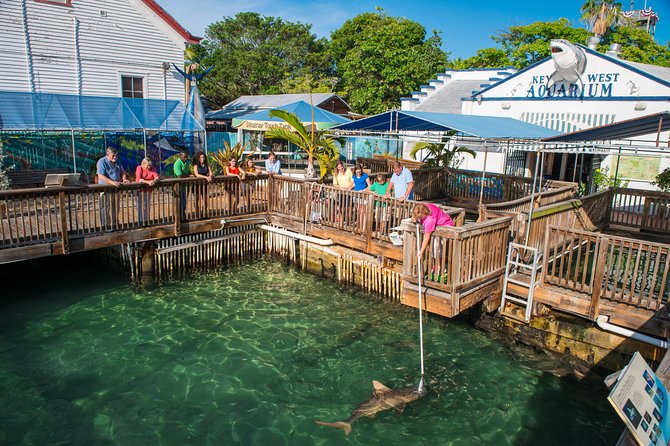
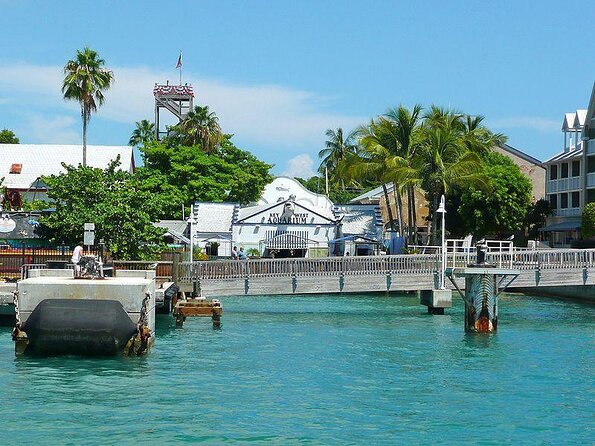
The aquarium sits at #1 Whitehead Street, at the corner of Front Street and Whitehead Street in Old Town Key West. It is right by Mallory Square, the center of the nightly Sunset Celebration.
That location makes the aquarium easy to add to a walking day. You can combine it with time around the waterfront, then return to the square later for sunset. Since you can leave and reenter with the same ticket, you are not forced to stay inside for the entire visit.
Metered parking is available around Mallory Square. A parking garage at the Westin Resort is one block away, and the Park and Ride garage on Caroline and Grinnell Streets connects to downtown by city bus.
I would avoid treating parking as an afterthought. Mallory Square is a busy part of Old Town, and a garage or bus may be less stressful than searching for a nearby meter.
A useful rainy-day and family stop
The aquarium is especially practical on a rainy day. Much of the visit takes place indoors, and the presentations give you a reason to stay longer than a quick glance at the tanks.
Families with younger children will get the most from the Touch Tank, stingray interaction, shark feeding, and turtle displays. The staff’s willingness to answer questions also helps keep the experience active for children who might otherwise lose interest in a small aquarium.
Teenagers and adults who expect a large collection may be less impressed. There are not enough exhibits here to fill an entire afternoon on their own. If you are looking for many species, elaborate habitats, or large-scale displays, the aquarium may feel limited.
Dogs are allowed if they remain on leashes. The aquarium can ask that an animal leave if it behaves aggressively or makes excessive noise. Food and drinks are not allowed inside.
The aquarium is one story and wheelchair accessible. Service animals are allowed, and most people can take part in the activities.
How long to stay and how to plan your visit
The usual visit lasts about 45 minutes to one hour. You can stretch that time by attending several presentations, asking questions, watching feedings, and using the reentry option.
The advertised visit window is roughly one to three hours, but that upper end depends on your interest in repeating talks and taking breaks. The aquarium itself does not require three hours for most people.
A good plan is to visit once in the late morning, catch the 11 a.m. shark feeding, then leave for lunch or nearby sightseeing. You can return for an afternoon presentation if you missed the turtle or stingray program.
Photography and video are allowed. That is useful at the Touch Tank and shark pool, where you may want a quick record of the encounter. Avoid blocking the viewing area while taking pictures, particularly during a feeding.
Price, value, and the nonprofit question
At $22.56 per person, the admission sits in an awkward middle ground. It is reasonable if you attend several presentations and use the interactive areas. It feels expensive if you arrive, walk through in 20 to 30 minutes, and leave without hearing a talk.
The aquarium’s nonprofit conservation work may also shape your decision. Some of the exhibits may be limited, and outside areas can be under construction at times. Even so, your admission supports an organization focused on local marine life and conservation.
I would not buy this ticket solely because the aquarium is old or because it sits in a famous part of Key West. I would buy it because you want a short local marine-life experience, particularly with children, and you are willing to schedule around the talks.
The free reentry policy improves the value. It lets you combine the aquarium with Mallory Square instead of spending the entire visit in one small building.
Booking and cancellation details
Your mobile ticket is offered in English, and confirmation is provided when you book. Free cancellation is available if you cancel at least 24 hours before the scheduled start time.
Cancellations made within 24 hours are not refunded, and changes inside that same period are not accepted. The cutoff follows local Key West time.
Because the aquarium can sometimes close for renovation or have limited areas during construction, check the current operating information before setting out. If you are relying on a particular presentation, also confirm the day’s schedule when you arrive.
Who should book the Key West Aquarium?
I would recommend this aquarium to families with young children, anyone interested in Florida Keys wildlife, and visitors who want an easy indoor stop near Mallory Square. It is also a good choice if you enjoy short educational talks more than simply reading labels beside tanks.
I would hesitate if you expect a major aquarium with hours of exhibits. The small size is the central issue, and no amount of clever presentation changes that. You should also think twice if $22.56 feels high for a one-hour activity.
Book it if you will attend the shark feeding, Touch Tank session, or sea turtle presentation. Skip it if you only want a quick look at fish and have limited time in Key West. Used as a flexible, local, family-friendly stop, it can be worthwhile. Treated as a full-day attraction, it will disappoint.
FAQ
Where is the Key West Aquarium located?
It is at #1 Whitehead Street, at the corner of Front Street and Whitehead Street in historic Old Town Key West, beside Mallory Square.
How much does admission cost?
The listed price is $22.56 per person.
How long should I plan to spend inside?
Most visits last about 45 minutes to one hour. You can stay longer by attending several presentations, and your ticket allows you to leave and reenter.
When are the shark feedings?
Shark feedings take place daily at 11 a.m., 1 p.m., 3 p.m., and 4:30 p.m.
Can I explore without joining a tour?
Yes. You can browse the exhibits independently or attend the public presentations, which are included with admission.
Is the aquarium wheelchair accessible?
Yes. The aquarium is one story and wheelchair accessible.
Can I bring my dog?
Yes. Dogs are welcome when kept on leashes. The aquarium may ask you to remove an animal that behaves aggressively or makes excessive noise.
Just added around the USA
- Muir Woods with Napa & Sonoma Wine Tour + Alcatraz Tour & Aquarium Access★ 5.0 · 2 reviews
- 2-Hour Mauna Kea One Stop Sealife Snorkel Adventure★ 5.0 · 3 reviews
- Mauna Kea 3hr Two Stop Sealife Snorkel Adventure★ 5.0 · 5 reviews
- Columbus, OH: Columbus Zoo and Aquarium Entry Ticket★ 3.0 · 2 reviews
- Georgia Aquarium: Sea Lion Encounter★ 4.7 · 7 reviews
- Austin Aquarium Entry Ticket★ 4.4 · 2 reviews
- From Orlando: Clearwater Beach and Marine Aquarium Admission★ 5.0 · 7 reviews
- Alcatraz Tour w/ Yosemite Day Tour & Aquarium Access★ 4.5 · 4 reviews
USA Aquariums, compared.

Atlanta: Georgia Aquarium Skip-the-Box-Office Entry Ticket
Read our review →

The Florida Aquarium in Tampa General Admission
Read our review →
LA: Aquarium of the Pacific Skip-the-Line Entry
Read our review →
Boston: New England Aquarium Entry + Optional Simons Theatre
Read our review →
SEA LIFE Orlando Aquarium Admission Ticket at ICON Park
Read our review →
Skip the Ticketing Line: Aquarium of the Pacific General Admission Ticket
Read our review →Browse the lists this tour appears in