
Review · AQUARIUM ENTRY TICKETS
Singapore: Singapore Oceanarium Entrance Ticket
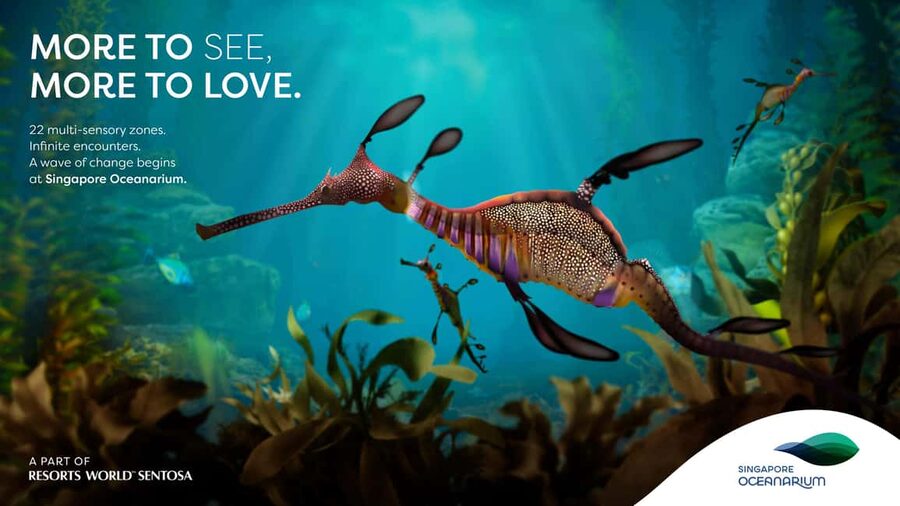
Rainy days need good shelter. Singapore Oceanarium gives you that, plus an enormous look at life beneath the water, from moon jellyfish and mangroves to whale-fall ecosystems and reef sharks. I like the 36-meter viewing panel, which gives the biggest animals room to move, and I like the hands-on mangrove displays, which make a complicated habitat easy to understand. The main drawback is the price: at $43 per person, this is not a quick, cheap stop.
Plan on roughly two and a half hours if you walk at a steady pace. You may stay longer, especially near the main tank, where sitting with a snack and watching the animals can be the best part of the visit. The ticket is valid for one day during regular park hours, but the activity is non-refundable and opening hours may change.
Key Points Before You Go
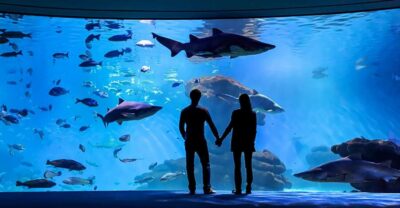
- The 36-meter panel is the visual centerpiece: Reef manta rays and zebra sharks give the largest habitat its wow factor.
- More than 5,000 moon jellyfish fill one huge kreisel tank: Their slow, glowing movement makes this a memorable stop for adults and children alike.
- The mangrove exhibit is built for participation: Touch-friendly displays help you understand how coastal habitats support many forms of life.
- The story moves beyond fish: Fossils and life-sized animatronics explain how marine life is linked to the evolution of land animals.
- The whale-fall exhibit explains an unusual deep-sea food chain: A dead whale can support an entire community for years.
- Your practical limit is time, not access: The ticket covers one day, and the Oceanarium is wheelchair accessible, but the attraction is non-refundable.
Arriving at Resorts World Sentosa
The Singapore Oceanarium is at Resorts World Sentosa, and you should proceed directly to the Oceanarium for ticket redemption. There is no separate meeting point or guided group to find, which keeps the arrival simple.
This is a good choice for a flexible day. You are not tied to a tour group, a guide, or a fixed route through Singapore. You can give the Oceanarium a short visit or spend much of the day moving between the major habitats.
I would treat the posted opening hours as changeable rather than fixed. The ticket is valid only during regular park hours and cannot be used for exclusive events. The Oceanarium will also be closed to the public on June 13, 2026, so check the date carefully before you commit.
The attraction is wheelchair accessible. Still, if you have mobility needs or are visiting with a wheelchair user, it is sensible to allow extra time for a slower route through the exhibits. The supplied information does not specify every access feature, so direct questions to the venue may be useful if you need particular facilities.
More Aquarium Entry Tickets in the world:
- Barcelona Aquarium: Entry Ticket
★ 4.4 · 16,717 reviews - Genoa: Aquarium of Genoa Entry Ticket
★ 4.5 · 10,075 reviews - Atlanta: Georgia Aquarium Skip-the-Box-Office Entry Ticket
★ 4.7 · 3,476 reviews
The Moon Jellyfish Kreisel Tank
One of the first major highlights is the very large kreisel tank holding more than 5,000 moon jellyfish. A kreisel is a circular aquarium designed to keep delicate animals moving in a gentle current rather than pushing them into corners.
The result is less like watching a single animal and more like watching a living cloud. The jellyfish drift, pulse, and turn in unhurried patterns. That scale matters. A small jellyfish display can be pretty, but thousands of animals create a stronger sense of the ocean as a system.
I would not rush past this tank. It gives you a quiet change of pace after the brighter, more information-heavy sections. Children can watch the jellyfish without needing a long explanation, while adults may appreciate the design of the habitat and the sheer number of animals inside it.
This is also one of the clearest examples of why the ticket costs more than a small local aquarium admission. You are not simply looking at a row of standard tanks. The Oceanarium uses large-scale habitats to show how animals behave in space that feels closer to their natural setting.
The Mangrove Habitat and Hands-On Displays
The mangrove section brings the ocean story closer to Singapore and Southeast Asia. Mangroves live where land and saltwater meet, and they provide shelter and feeding grounds for a wide range of life.
The interactive displays are designed to be touch-friendly, which gives the section a more active role than a wall of text. You can learn through simple physical interaction rather than reading every label. That makes this part especially useful for families, school-age children, and anyone who finds traditional aquarium signage tiring.
I like that the Oceanarium does not limit the ocean story to coral reefs and large fish. Mangroves may look modest beside a giant tank, yet they help explain how coastlines function. They also show why ocean protection involves habitats near shore, not just distant blue water.
The section may not provide the biggest visual moment of the visit, but it gives the experience some local relevance. You are asked to think about the connection between land, rivers, coastlines, and marine life. That broader view gives the visit more purpose than a simple parade of attractive animals.
From Ancient Seas to Life on Land
The marine evolution section uses fossils and life-sized animatronics to show how life developed from the water toward land. This is a smart way to add a historical timeline to an aquarium visit without turning the whole place into a science lecture.
The fossils provide real evidence, while the animatronics make the animals easier to picture. If you are visiting with children, the full-sized models may hold attention better than small fossil displays alone. If you enjoy natural history, you will likely appreciate the attempt to connect ancient marine life with later changes on land.
Do not expect a university-level lesson from this section. Its strength is clarity. It gives you a basic framework for understanding that the ocean is not an isolated subject. Many major changes in life on Earth began in marine environments, and the exhibits use scale and movement to make that idea easier to grasp.
I also like the variety here. After jellyfish and living habitats, the fossils provide a physical link to deep time. You get a break from watching animals and a reason to think about how much the planet has changed.
A few more aquarium days around the world worth a look
- Dubai: Aquarium and Underwater Zoo Experience
★ 4.2 · 4,872 reviews - Atlantis Aquaventure Ticket (with options for Aquarium), Dubai
★ 4.5 · 4,679 reviews - London: SEA LIFE Entry Ticket
★ 4.4 · 3,428 reviews - Mallorca: Palma Aquarium Entry Ticket w/ Optional 3D Cinema
★ 4.5 · 3,076 reviews
Whale Falls and the Deep-Sea Food Chain
The whale-fall exhibit tackles one of the more unusual subjects in the Oceanarium. When a whale dies and sinks to the seafloor, its body can feed a large community of organisms. The remains become a temporary habitat, supporting life in a place where food is scarce.
This is a valuable lesson because it challenges the simple idea that death marks the end of an animal’s role. In the deep sea, a whale fall can sustain an entire ecosystem. The exhibit gives you a practical example of how energy moves through an environment under very different conditions from those on the surface.
The whale-fall section is likely to appeal most to visitors who enjoy unusual animal facts and ecological connections. It may be less immediately dazzling than a tank full of rays, but it rewards attention. I would take time to read the explanations here rather than treating it as a corridor between larger displays.
This stop also supports the Oceanarium’s stated focus on marine education and conservation. You are encouraged to see the ocean as a network of relationships, not just a collection of individual creatures. That is a stronger message than simply showing rare animals behind glass.
The 36-Meter Panel with Manta Rays and Zebra Sharks
The largest visual payoff comes at the 36-meter-wide panel featuring reef manta rays and zebra sharks. The broad viewing window gives these animals enough room to move across your field of view, which changes the feeling of the encounter.
A manta ray moving through a large panel can appear almost weightless. Zebra sharks bring a different shape and rhythm. Together, they give you a useful comparison between two large marine animals that occupy the same broad habitat but move in very different ways.
This is the place to slow down. One visitor spent about two and a half hours walking through the Oceanarium and specifically recommended taking a snack near the big tank, then sitting for a while. That is practical advice. The viewing panel is not only a photo stop. It is the point where patience pays off.
The main tank can also absorb time if you are visiting with children. You may think you will watch for five minutes, then find yourself waiting for another ray to cross the window. If the Oceanarium feels expensive at first, this is the display most likely to make the admission feel worthwhile.
The only caution is crowding around a popular viewing panel. The available information does not give a crowd forecast or seating layout, so do not assume you will have an uninterrupted front-row view. Giving yourself flexible time helps.
The Oceanarium’s Conservation Mission
The Singapore Oceanarium presents itself as more than an entertainment venue. Its stated mission includes marine education, research, and support for the conservation and preservation of threatened species.
That mission is backed by partnerships with global institutes and affiliations with the Association of Zoos and Aquariums, the World Association of Zoos and Aquariums, and the Southeast Asian Zoo and Aquarium Association. These affiliations do not automatically make every exhibit perfect, but they indicate that the institution works within wider professional networks.
The Research and Learning Centre adds another layer. It is designed for conservation, research, and community engagement, and it has Green Mark Platinum Zero Energy certification from Singapore’s Building and Construction Authority. The centre operates fully on solar power.
You may not get access to every research space during a standard admission visit. Still, its presence helps explain where the Oceanarium hopes to go. The ticket supports a place that links public exhibits with scientific work and community education, rather than a venue focused only on decoration.
For me, this is an important part of the value question. You are paying for a major public attraction, but the institution also presents a conservation and research role. If you care about how aquariums contribute to education and environmental work, that makes the visit more meaningful.
How Long Should You Allow?
The ticket is valid for one day, and you can use the time at your own pace. A practical visit may take about two and a half hours, based on the amount of time one visitor spent walking through the exhibits.
I would allow at least two hours if you want to see the main habitats without rushing. Add more time if you plan to sit near the large tank, read the educational displays, or stop for a snack.
A one-day ticket does not mean you need to remain inside all day. It gives you flexibility around the rest of your plans at Resorts World Sentosa. You can visit during a rainy spell, take your time indoors, and then continue with other activities when convenient.
Rain is actually a sensible reason to choose this attraction. Singapore showers can disrupt outdoor plans, while the Oceanarium gives you a substantial indoor activity. The experience is not a mere emergency substitute for sunshine. The large habitats and educational sections can support a full half-day visit.
Is $43 Good Value?
At $43 per person, the ticket is a significant expense, particularly for a family. I would not call it a bargain in the narrow sense. The attraction becomes better value if you appreciate large aquariums, marine science, or educational exhibits and plan to spend several hours inside.
The strongest value comes from the combination of scale and variety. You get thousands of moon jellyfish, a major manta ray and zebra shark panel, mangrove displays, fossils, animatronics, and the whale-fall story. A smaller aquarium might offer one or two of these ideas, but the Oceanarium connects them into a larger account of marine life.
You may feel less satisfied if you want only a quick photo opportunity. The ticket is non-refundable, so do not buy it casually and hope to fit it into a packed schedule. Check your date and available hours first, then decide if you can give the attraction enough time.
I would also consider the weather. On a rainy day, the price may feel easier to justify because the Oceanarium gives you a substantial indoor plan. On a clear day, compare it with your other Sentosa options and ask how much you value marine exhibits.
Who Will Enjoy This Most?
I would recommend the Singapore Oceanarium most strongly to:
- Families who want hands-on learning instead of rides alone
- Aquarium fans who enjoy very large tanks
- Visitors planning a rainy-day activity
- Adults interested in ecology, fossils, and conservation
- People who prefer to explore independently at their own pace
- Anyone who likes sitting quietly at a large viewing panel
Young children should find the jellyfish, life-sized animatronics, and touch-friendly mangrove displays easy to approach. Older children and adults may get more from the whale-fall and evolution sections, where the value lies in understanding the systems behind the animals.
You may want to skip it if $43 feels too high for a two-to-three-hour indoor attraction or if your schedule allows only a very short stop. Since the admission is non-refundable, your decision should be based on available time as much as interest.
Practical Details Before Booking
You receive admission to the Singapore Oceanarium only. Personal expenses, including snacks, are not included. A snack near the large tank may be worthwhile, but budget for it separately.
The activity is wheelchair accessible. Follow all posted rules during the visit, since ignoring them can cause injury or result in being asked to leave.
The ticket is valid for one day during regular park hours and is not valid for exclusive events. Hours can change without notice. The Oceanarium is closed to the public on June 13, 2026.
The listed provider is GlobalTix Pte Ltd. The activity is non-refundable, so check the date, operating hours, and your Sentosa plans before purchase.
Should You Book the Singapore Oceanarium?
Book it if you want a serious indoor attraction with large habitats, strong educational content, and enough variety to fill a few hours. I especially recommend it for a rainy day, a family visit, or anyone who likes watching marine animals without being pushed through a fixed tour.
The best reason to go is the scale: 5,000-plus moon jellyfish, a 36-meter panel with manta rays and zebra sharks, and exhibits that explain everything from mangrove life to whale falls. The main reason to hesitate is the $43 price and non-refundable ticket.
If you can spare about two and a half hours, take time near the large tank, and care about what the exhibits are teaching, I think the ticket offers fair value. If you only want a quick stop, save your money for another Sentosa activity.
FAQ
Where is the Singapore Oceanarium?
The Singapore Oceanarium is located at Resorts World Sentosa in Singapore.
How much does admission cost?
The listed price is $43 per person.
How long is the ticket valid?
The ticket is valid for one day during regular park hours.
Is the Singapore Oceanarium wheelchair accessible?
Yes, the activity is wheelchair accessible.
What is the largest featured viewing panel?
The Oceanarium has a 36-meter-wide panel featuring reef manta rays and zebra sharks.
How many moon jellyfish are in the kreisel tank?
The tank contains more than 5,000 moon jellyfish.
Are snacks included with admission?
No. Personal expenses, including snacks, are not included.
Can I use the ticket during an exclusive event?
No. The ticket is valid only during regular park hours and cannot be used for exclusive events.
Is the ticket refundable?
No. This activity is non-refundable.
Just added around the world
- Zanzibar: Nungwi Mnarani Aquarium Feed and Swim with Turtles★ 3.0 · 3 reviews
- ZANZIBAR: Mnemba Island Snorkeling & Turtle Aquarium Tour★ 5.0 · 3 reviews
- ZANZIBAR: Mnemba island, Baraka aquarium and spice farm★ 5.0 · 3 reviews
- Veracruz: Panoramic Sightseeing City Tour and Aquarium★ 3.7 · 3 reviews
- Zanzibar: Horseback Riding and Turtle Aquarium Visit★ 4.3 · 4 reviews
- Zanzibar: Jozani Forest, Kuza Cave & Salaam Cave Aquarium★ 4.1 · 6 reviews
- Private Mnemba Island and Turtle Aquarium Tour★ 5.0 · 3 reviews
- Full Day Private Mnemba Island + Turtles Aquarium & Kendwa Beach★ 4.0 · 6 reviews
Aquarium Entry Tickets, compared.

Atlanta: Georgia Aquarium Skip-the-Box-Office Entry Ticket
Read our review →
Mallorca: Palma Aquarium Entry Ticket w/ Optional 3D Cinema
Read our review →
St Paul’s Bay: Malta National Aquarium Entry Ticket
Read our review →
Browse the lists this tour appears in