
Review · JAPAN AQUARIUMS
Tokyo Art Aquarium Museum E-Ticket with optional Tokyo Metro Pass
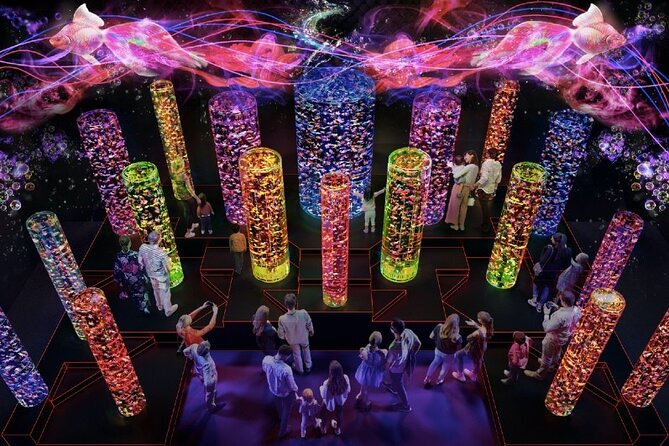
Goldfish become art in central Tokyo. The Art Aquarium Museum GINZA turns ornamental fish into part of a theatrical display of light, sound, fragrance, flowers, and Japanese design. I like the unusual mix of aquarium and art museum, and I like its convenient location inside Ginza Mitsukoshi, close to Tokyo Station and the Imperial Palace Plaza. The main consideration is the short visit: most people will spend about one to two hours here, so it works best as part of a larger Ginza plan.
The museum’s theme, Hyakka Ryoran: evolving art, draws on Japan’s long tradition of appreciating goldfish, which began during the Edo period from 1603 to 1867. The displays are beautiful and highly photogenic, with cherry blossoms and carefully arranged fish among the details praised most often. Still, this is not a conventional aquarium with broad educational exhibits or large marine habitats. It is a stylized art experience focused on atmosphere.
Key points to know before you go
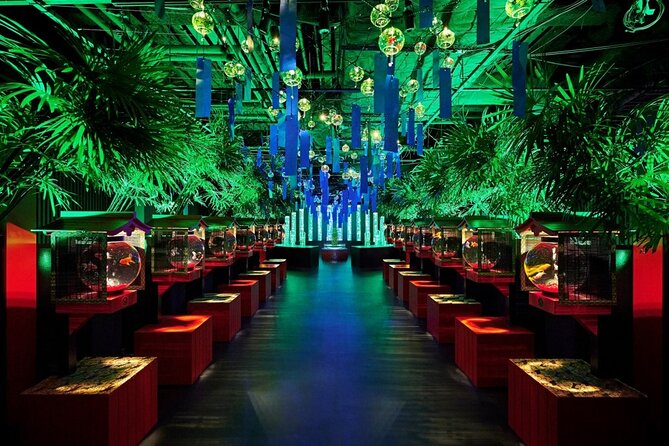
- Goldfish are the main attraction: You will see many types of ornamental goldfish in specially designed tanks and small containers.
- Japanese culture shapes the displays: Flowers, traditional forms, light, sound, and fragrance create a modern take on Edo-era goldfish appreciation.
- Plan for one to two hours: The museum is easy to add before or after shopping, a meal, or another Ginza sight.
- Ginza Mitsukoshi makes the location handy: You are near Tokyo Station, the Imperial Palace Plaza, established restaurants, and retro cafes.
- Bring your passport or photo ID: A valid identity document must be shown at the entrance.
- The ticket is date and time specific: The confirmation email is not the official ticket. The actual e-ticket is sent by email by the day before your visit.
What the Art Aquarium Museum GINZA actually is
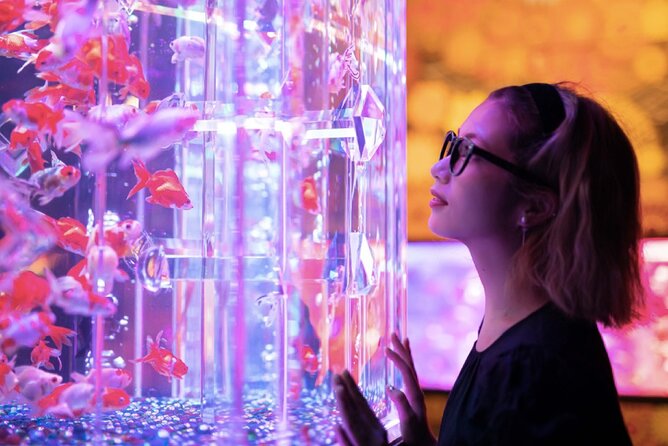
The Art Aquarium Museum GINZA is not designed like a standard public aquarium. You will not come here to study a long sequence of marine habitats, read extensive scientific panels, or watch large sea animals glide through giant tanks. The focus is goldfish, presented as living parts of a visual art installation.
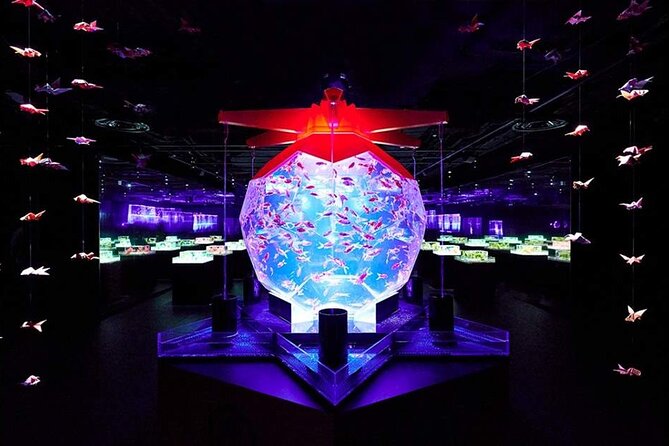
That distinction matters. The experience is built around how the fish look within their surroundings. Light, music or sound, fragrance, flowers, and Japanese decorative ideas are combined to create a fantasy setting. The fish remain the subject, but the room around them changes how you see them.
The museum carries forward the Art Aquarium concept, which has existed for about 15 years through temporary exhibitions in Japan and abroad. The Ginza museum is described as its second chapter as a museum, with the current presentation shaped around Hyakka Ryoran: evolving art. The phrase suggests flowers in full display, and the floral decoration is an important part of the visual effect.
I would think of the museum as a compact art walk with live animals at its center. You move from one arrangement to another, stopping to examine the fish, the containers, the lighting, and the decorative details. It is a good choice if you want something different from Tokyo’s major temples, observation decks, and shopping streets.
More Aquarium Entry Tickets in Japan:
- Tokyo: Art Aquarium Museum GINZA Entry Ticket
★ 4.5 · 278 reviews - Tokyo: Sumida Aquarium Entry Ticket
★ 4.6 · 70 reviews - Tokyo: Sunshine Aquarium Entry Ticket
★ 4.6 · 55 reviews
Entering a world of goldfish and flowers
The visit begins with the museum’s central idea: goldfish, known in Japan as kingyo, can be appreciated for their form, color, and movement. Goldfish culture in Japan reaches back to the Edo period, when people began keeping and enjoying them as ornamental fish. The museum connects that older tradition with modern lighting and installation art.
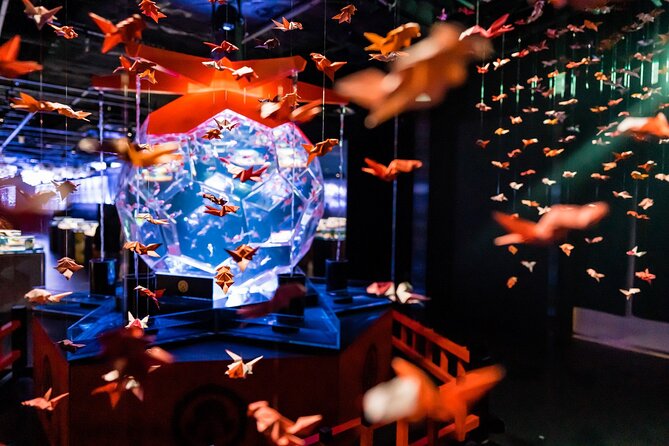
The result is deliberately theatrical. A small fish may become the focus of a room because of the shape of its tank, the color around it, or the way the lighting catches its fins. In one display, the arrangement may feel delicate and floral. In another, the emphasis may be on color or repetition.
This is where the experience earns its ticket price for many people. You are not simply looking at fish in containers. You are seeing them placed within a designed composition. The same creature that might seem ordinary in a home aquarium takes on a different character when surrounded by Japanese motifs and carefully controlled atmosphere.
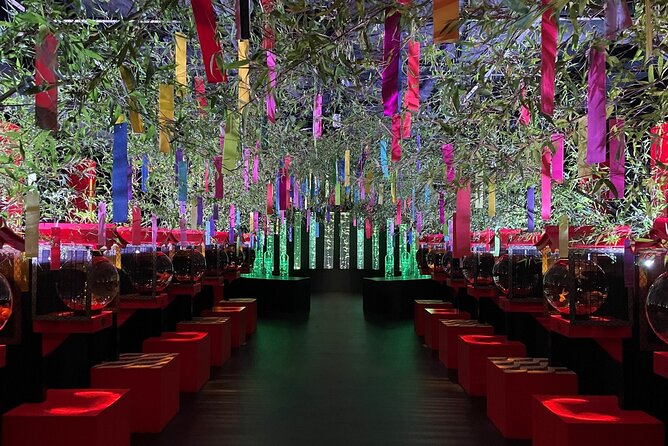
The cherry blossom elements are especially appealing. They give the displays a seasonal Japanese feel without requiring a visit during cherry blossom season itself. If you enjoy photography, you will likely find plenty of details to frame, though the museum’s atmosphere is more important than any single picture.
Why the light, sound, and fragrance matter
The Art Aquarium approach uses more than visual decoration. Light, sound, and fragrance are part of the setting, so you should expect a sensory experience rather than a quiet, traditional gallery.
That combination can make the visit feel calm and dreamlike. One review described it as relaxing, and that fits the museum’s basic appeal. You are indoors, moving at an unhurried pace, watching fish circle through unusual arrangements while the surrounding design changes your sense of space.
The sensory approach also means that this will not suit everyone equally. If you prefer a plain aquarium where you can clearly see the animals and learn about their care, the theatrical styling may feel like too much. The museum is more concerned with mood and beauty than with natural habitats or detailed fish education.
I like that the concept connects an old Japanese pastime with contemporary art instead of treating the goldfish as a simple novelty. The experience asks you to notice shape, movement, color, and presentation. It is light on formal explanation, but strong on visual impact.
The itinerary is one focused museum visit
There is only one scheduled stop: the Art Aquarium itself. That makes the experience easy to understand and easy to fit into a busy Tokyo day. You are not being moved between several attractions, and there is no pickup or drop-off service to coordinate.
Allow about one to two hours. The exact pace depends on how closely you examine each display and how much time you spend taking photographs. Someone making a quick visit may finish sooner. Someone who enjoys small details and repeated viewing may use the full time.
The museum is a particularly useful indoor stop in Ginza. You can pair it with department-store shopping, a meal, or a walk toward Tokyo Station and the Imperial Palace Plaza. Ginza also has long-established restaurants and retro cafes, so the museum can sit comfortably between a traditional meal and an afternoon of city sightseeing.
Because there is just one attraction, you should not book this expecting a full-day tour. The ticket gives you access to a specific art experience, not a guided city tour. Its strength is convenience and focus.
More Museum Visits in Japan:
- Antalya: Aquarium and Wax Museum Entry Ticket
★ 4.4 · 192 reviews - Genoa: Aquarium, Galata Museum and Submarine Entry Tickets
★ 4.6 · 190 reviews - Antalya: Aquarium, Wax Museum & Combo Package Options
★ 4.1 · 128 reviews - Antalya: Aquarium, Wax Museum & Combo Package Options
★ 4.5 · 35 reviews
Location inside Ginza Mitsukoshi
The museum is located in Ginza Mitsukoshi, a major department store in the Ginza district. This puts you in one of Tokyo’s most useful sightseeing areas, with shopping, dining, and transport nearby.
The location is a practical advantage. You can visit the museum without giving up a large block of your day, then continue exploring Ginza. It is also close to Tokyo Station and the Imperial Palace Plaza, which helps if those places are already on your schedule.
You receive no pickup or drop-off, so you need to make your own way there. The location is near public transportation, and the optional Tokyo Metro Pass may help if you plan to use the subway for other parts of Tokyo. The available information does not specify the pass duration, routes, or exact savings, so check those details before choosing it.
Do not count on bringing luggage inside. Outside food, beverages, and luggage are not allowed. For a smooth visit, arrive with only what you need for the museum and keep larger bags elsewhere.
Is the $29 ticket good value?
At about $29 per person, this is not the cheapest short attraction in Tokyo. The value depends on what you want from your time in the city.
I think the ticket makes sense if you enjoy unusual art, Japanese cultural themes, and carefully designed interiors. You are paying for a specialized experience rather than a large aquarium collection. The museum’s combination of goldfish, flowers, lighting, sound, and fragrance gives it a clear identity.
The price may feel less worthwhile if you expect hours of entertainment or a broad educational aquarium. The visit lasts roughly one to two hours, and the subject is tightly focused. You will not get a full Tokyo sightseeing program for the price.
The optional Metro Pass could improve the overall value if it matches your other subway plans. It should not be chosen automatically just because it is offered with the museum ticket. Compare it with your planned journeys and confirm its terms before booking.
The ticket includes admission according to the grade selected. Food, drinks, transportation, and hotel pickup are not included. The booking confirmation sent through the booking platform is also not the official entry ticket. The actual e-ticket should arrive by email by one day before the selected date, and you can show it on your phone without printing.
Who will enjoy this unusual museum?
I would recommend it most strongly to people who enjoy visual art, Japanese design, photography, and compact cultural attractions. It can work well for couples, families, and solo visitors who want an indoor activity with a calm pace.
It is also a good choice if you have only a short window in Ginza. The museum gives you a defined experience, then leaves you free to shop, eat, or continue sightseeing. You do not need to build an entire day around it.
Children may enjoy the color and movement of the fish, though the information provided does not give a specific age recommendation. The experience is not presented as a hands-on attraction, so children who need active entertainment may find the slow viewing pace less engaging.
I would be cautious if you are sensitive to strong visual presentation, sound, or fragrance. Those elements are part of the museum’s design. I would also choose another aquarium if your main interest is marine biology, large tanks, or natural aquatic environments.
Timing, entry rules, and the details that matter
Your ticket is valid only for the date and time selected. Arriving at the wrong time could create a real problem, since failing to report on time is treated as a no-show with no rescheduling or refund.
Bring a valid passport or other accepted photo ID. Identity proof is required at the entrance, so do not leave your passport behind if it is the document you plan to use.
The booking confirmation is not the official ticket. Wait for the e-ticket sent by email by the day before your visit. You can display it on your smartphone, which saves you from printing paperwork.
The experience is listed as suitable for most people and is near public transportation. No special participation requirement is given beyond the entry rules and the restrictions on food, drinks, and luggage.
The cancellation policy is strict. The ticket is non-refundable and cannot be changed for any reason. The provider also says the experience requires good weather. If poor weather causes a cancellation, you will be offered another date or a full refund. Since this is an indoor museum, that weather condition is worth checking carefully when you book.
A closer look at the strongest parts
The most praised feature is the originality of the concept. Combining a museum and aquarium gives the visit a different feel from a standard fish exhibit. You are seeing living goldfish as part of art pieces, not simply lined up in ordinary tanks.
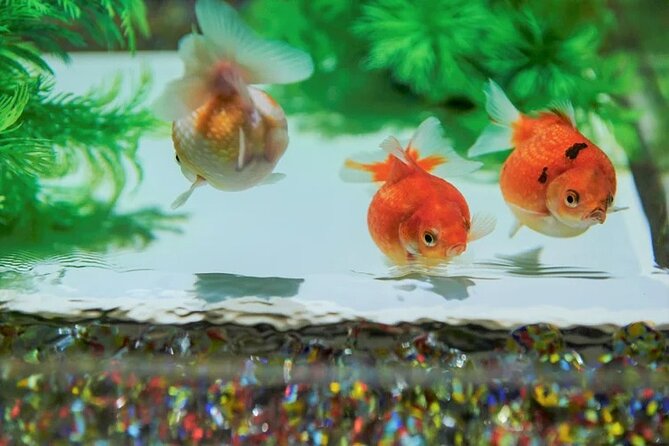
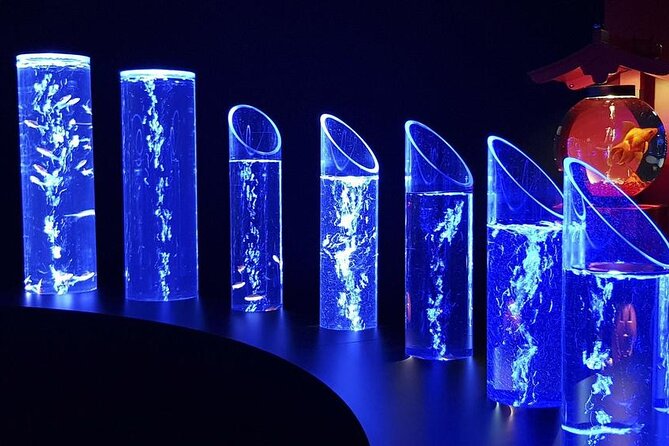
The displays themselves receive the most attention. Different types of goldfish appear in small containers and specially arranged settings. The floral work, particularly the cherry blossom elements, adds a distinctly Japanese touch and helps the museum feel tied to seasonal beauty.
The atmosphere is another strong point. Light, sound, and fragrance make the visit feel relaxing and slightly magical. That mood is likely to appeal to you if you enjoy quiet visual experiences rather than crowded, high-energy entertainment.
Finally, the location earns practical points. A museum inside Ginza Mitsukoshi is easy to combine with a shopping trip or a meal. Being close to Tokyo Station and the Imperial Palace Plaza gives you several ways to build the rest of your day.
Should you book the Art Aquarium Museum GINZA?
Book it if you want a short, distinctive Tokyo experience built around Japanese design and ornamental goldfish. The $29 price is reasonable for a carefully produced art attraction, especially if you already plan to be in Ginza and value atmosphere more than a large collection.
Skip it if you want a traditional aquarium, extensive educational displays, or a longer tour with transportation and a guide. The museum is focused, visual, and relatively brief.
For the best fit, schedule it during a Ginza outing, bring your photo ID, wait for the official e-ticket, and arrive at the selected time. If the idea of goldfish presented through flowers, lighting, sound, and fragrance appeals to you, this unusual museum deserves a place on your Tokyo list.
FAQ
Where is the Art Aquarium Museum GINZA located?
It is located inside Ginza Mitsukoshi in Ginza, Tokyo. The area is close to Tokyo Station and the Imperial Palace Plaza.
How long does the experience take?
The visit takes approximately one to two hours.
What does the admission ticket include?
The ticket includes admission according to the tour grade selected at booking.
Is food or transportation included?
No. Food, drinks, pickup, and drop-off are not included.
Do I need to bring identification?
Yes. You must bring a valid photo ID or passport and show it at the entrance.
Can I use the booking confirmation to enter?
No. The booking confirmation is not the official ticket. The e-ticket is sent by email by one day before the selected visit date, and you can show it on your smartphone.
Can I cancel or change the ticket?
The experience is non-refundable and cannot be changed for any reason. If poor weather causes the provider to cancel it, you will be offered another date or a full refund.
Just added around Japan
- Tokyo Sumida Aquarium E-Ticket with Optional Tokyo Metro Pass★ 4.5 · 8 reviews
- Kagoshima Aquarium Admission Ticket★ 3.0 · 4 reviews
- Kujukushima: Aquarium Umikirara Admission Ticket★ 4.4 · 2 reviews
- Kyoto Aquarium Admission Ticket★ 4.7 · 12 reviews
- Okinawa: Bus Tour to Churaumi Aquarium with Sightseeing★ 4.3 · 20 reviews
- Okinawa Full Tour: Castle, Manza, Kouri, Aquarium & American★ 5.0 · 17 reviews
- Okinawa Miyako Natural Aquarium! Tropical Snorkeling Tour★ 5.0 · 15 reviews
- Explore Okinawa (Naha, Churaumi Aquarium) using Private Hiace Van★ 4.0 · 10 reviews
Japan Aquariums, compared.
Naha: North Okinawa Sightseeing Tour & Churaumi Aquarium
Read our review →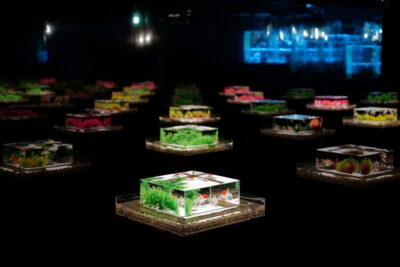
Okinawa Churaumi or Tropical, Kouri American Village BusTour
Read our review →
Okinawa: Churaumi Aquarium, Ryukyu Village & Manza Bus Tour
Read our review →
Okinawa HIP-HOP BUS B – 1 Course Tour (Okinawa Churaumi Aquarium)
Read our review →

<1Dya Tour>Churaumi Aquarium, Cape Manzamo, American Village
Read our review →Browse the lists this tour appears in