
Review · JAPAN AQUARIUMS
Kujukushima: Aquarium Umikirara Admission Ticket
The sea tells its own story here. Umikirara gives you a close look at Kujukushima Bay through big tanks, dolphin displays, jellyfish, crabs, shellfish, and hands-on specimen viewing. I like the chance to hear a local breeder explain the animals while they feed, and I like the Agoya oyster activity, which lets you take home a pearl as a small, personal souvenir.
The $9 admission price is easy to justify if you are already visiting the Kujukushima area. You get a full day of access rather than a tightly timed show, but transportation, food, and special activities cost extra. The main drawbacks are practical: the aquarium is not suitable for wheelchair users, people with animal allergies, or people prone to seasickness, and some schedules can change.
Key points to know before you go
- Kujukushima Bay in the big tank: Watch local fish gather for feeding while a breeder explains what you are seeing.
- A manta ray may be the star: The large tank is a key highlight, especially if you want to see the ray and other open-water creatures.
- Dolphins with a purpose: The dolphin program combines tricks with information about their intelligence and athletic ability.
- More than a standard aquarium: You can see over 100 kinds of jellyfish, about 60 kinds of coastal crabs, and 120 kinds of shellfish.
- A pearl you can take home: The Agoya oyster activity offers a tangible souvenir, though special handwork programs require advance advice and may cost extra.
- A flexible one-day visit: Your ticket is valid for one day, giving you room to set your own pace.
Why Umikirara feels tied to Kujukushima Bay
Many aquariums present animals from far-off waters. Umikirara takes a more local approach. Its focus is the sea around Kujukushima, a coastal area known for complicated underwater terrain and a large range of marine life.
That local focus matters. You are not just looking at fish in a glass box. You are learning why this particular bay can support so many kinds of organisms. The aquarium explains that around 1,000 fish species live off the Kujukushima coast, compared with about 3,500 fish species in the Japanese Sea and roughly 20,000 fish species across the world.
Those numbers give the visit some useful scale. Kujukushima is not simply a scenic group of islands. Its underwater features create different conditions for fish and other sea life. The result is a place where you can see a wide range of species in a relatively focused setting.
I especially like this approach for families and curious adults. You can connect what you see in the tanks with the actual waters outside. It also makes the visit more meaningful than simply counting colorful fish.
More Aquarium Entry Tickets in Japan:
- Tokyo: Art Aquarium Museum GINZA Entry Ticket
★ 4.5 · 278 reviews - Tokyo: Sumida Aquarium Entry Ticket
★ 4.6 · 70 reviews - Tokyo: Sunshine Aquarium Entry Ticket
★ 4.6 · 55 reviews
The big Kujukushima Bay tank and its feeding session
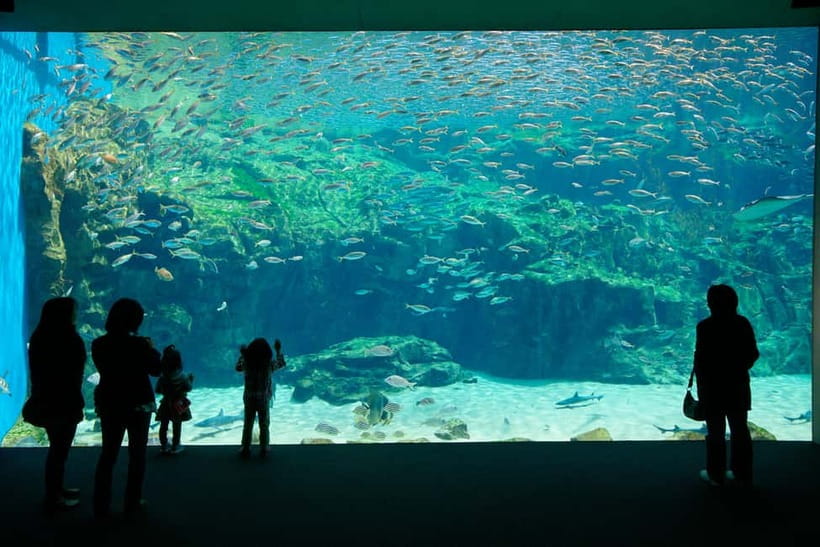
The main tank is likely to be the visual center of your visit. It represents Kujukushima Bay and lets you watch local fish move through a much larger underwater setting.
The feeding session adds action. Fish gather for bait, and a local breeder explains what is happening as you watch. This is a useful format because the animals become easier to observe when they are active. Instead of waiting for a fish to drift into view, you get a natural reason to watch their movement, feeding habits, and relationship to one another.
The breeder’s explanation is also important. You can learn about the animals from someone who works closely with them, rather than relying only on display labels. The information provided does not name the breeder, so you should not expect a particular guide by name. The main value is the live explanation alongside the feeding.
One review singled out the tank with the manta ray. That makes sense as a practical priority: if the ray is visible during your visit, give yourself time to watch it instead of rushing through the room. Large animals often attract the first glance, but the smaller fish around them can be just as interesting during feeding.
There is one thing to keep in mind. Feeding schedules may change for operational reasons. Check the timetable before you arrive, and do not build your whole day around a single presentation.
The Goto marine tank and a second look at feeding behavior
The Goto marine tank gives you another chance to watch fish eat bait. Seeing two feeding areas can help you compare different marine settings and animal behavior.
The supplied information does not provide a precise timetable or list every species in this tank, so I would treat it as a learning stop rather than expect a fixed show format. The strength is the chance to watch animals become active while staff explain what you are seeing.
Take a little time here. Feeding programs are easy to watch for two minutes and then leave, but you will get more from them if you pay attention to how fish approach the food. Some may move quickly, while others may wait or stay near the bottom. The breeder’s commentary should help make those differences clearer.
If you are visiting with children, this is a good moment to turn observation into a simple game: ask them to notice which fish arrive first, where they gather, and how they move once the food enters the water. That keeps the visit active without touching the animals.
Dolphins, athletic ability, and animal intelligence
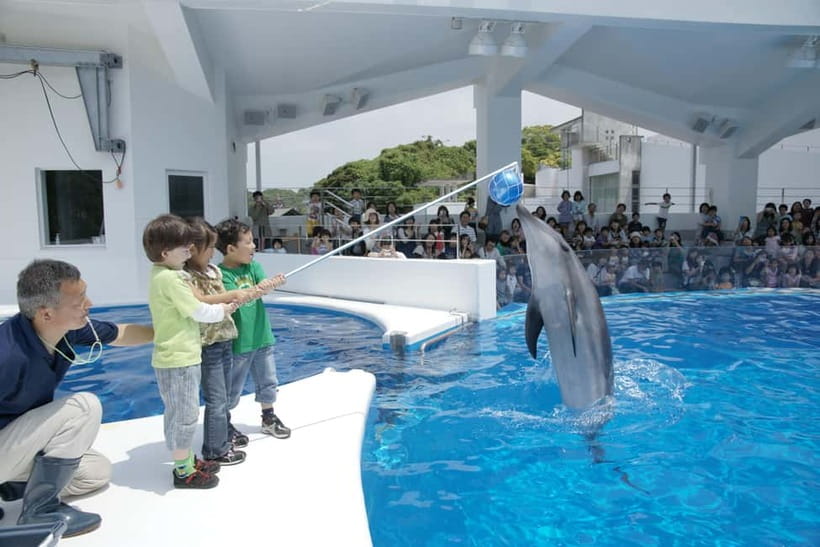
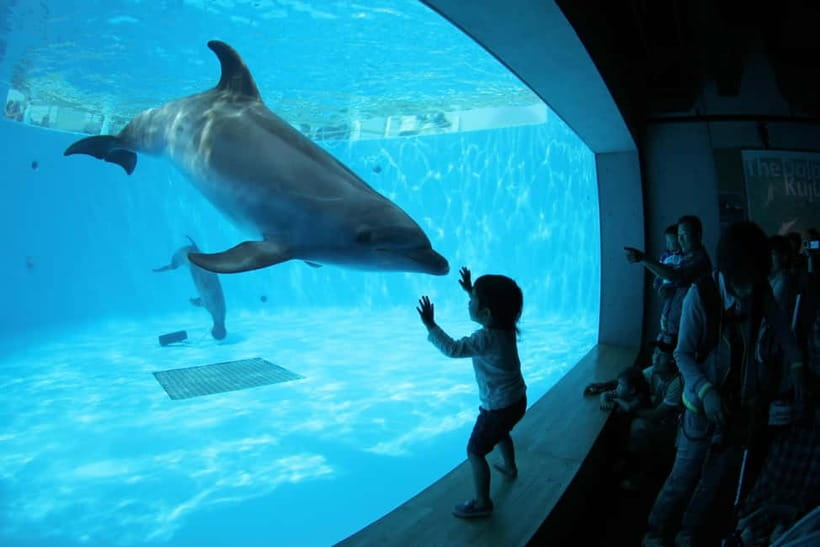
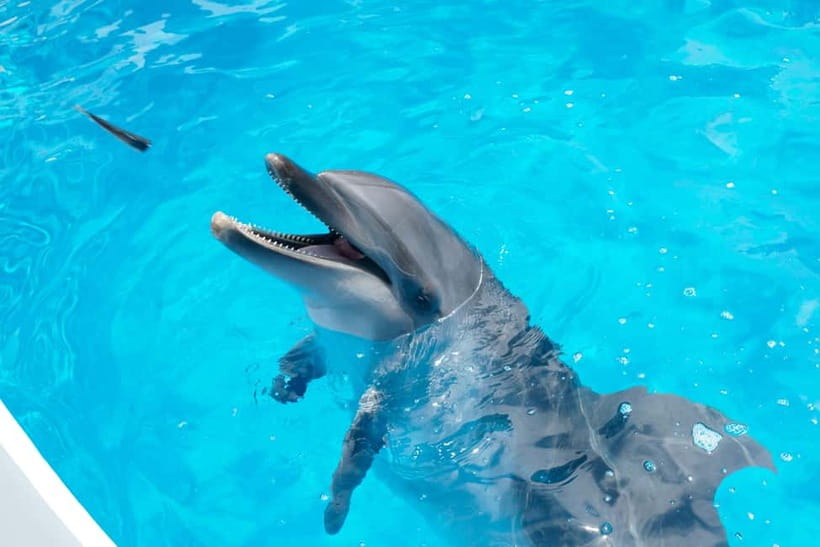
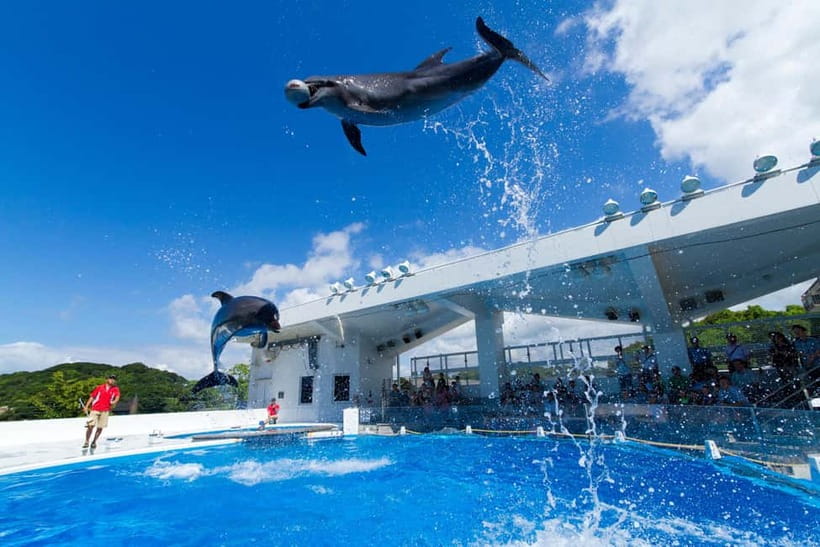
The dolphin presentation adds a more familiar crowd-pleaser to the local sea-life focus. You can watch dolphins perform tricks while learning about their intelligence and athletic ability.
The information provided does not promise a long performance or list the exact tricks. That is useful to remember when setting expectations. This is part of an aquarium visit, not necessarily a full-day dolphin encounter.
Still, the educational angle gives the show more substance. Tricks can look like simple entertainment, but they also display coordination, speed, and the animals’ ability to respond to instruction. The program encourages you to think about how dolphins learn and communicate.
I would place the dolphin portion high on your schedule if you are visiting with children, but I would not make it your only reason to buy the ticket. The broader value of Umikirara comes from the mix of local marine-life displays, feeding talks, specimens, and smaller collections.
The facility does not permit you to touch marine life. That rule is worth explaining to children before you enter. You can watch closely, but the animals are not a petting attraction.
A few more aquarium days around Japan worth a look
- Naha: North Okinawa Sightseeing Tour & Churaumi Aquarium
★ 4.4 · 472 reviews - Okinawa Churaumi or Tropical, Kouri American Village BusTour
★ 4.4 · 140 reviews - Okinawa: Churaumi Aquarium, Ryukyu Village & Manza Bus Tour
★ 4.5 · 118 reviews - Okinawa HIP-HOP BUS B – 1 Course Tour (Okinawa Churaumi Aquarium)
★ 5.0 · 66 reviews
Jellyfish, crabs, and shellfish in impressive variety
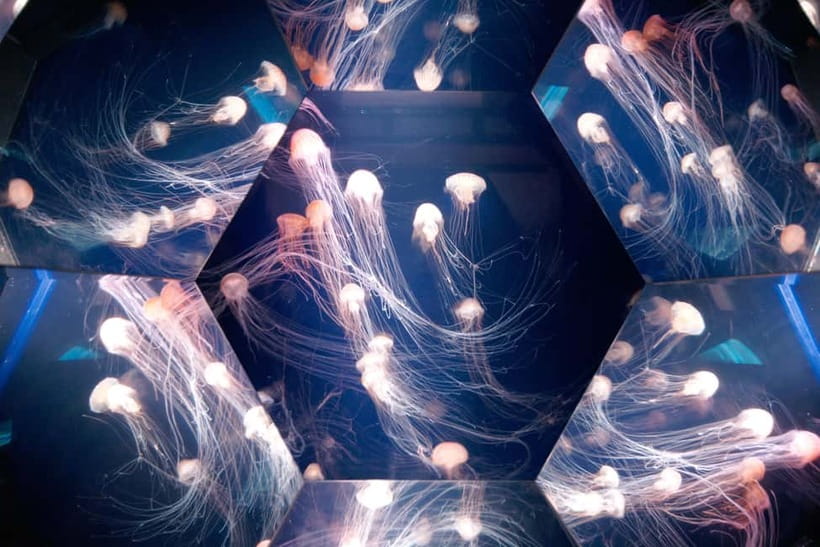
The smaller displays may reward more patient attention than the headline attractions. Umikirara presents more than 100 species of jellyfish, around 60 species of crabs along the coast, and about 120 species of shellfish.
That range gives you a better sense of the coast as a whole. Fish tend to get the attention, but crabs, shellfish, and jellyfish are essential parts of marine life. Their shapes and movements also make a nice change from the larger tanks.
Jellyfish displays work best when you slow down. Their movement is quiet and steady, so this can be one of the calmer parts of the visit. The crab and shellfish displays offer a different kind of observation, with body shapes and adaptations that are easy to compare.
You may also have the chance to touch and examine biological specimens. The important distinction is that specimens are available for observation and learning, while living marine life and plants must not be touched. Follow the posted instructions and staff guidance.
This section is especially useful if you want more than a quick circuit through the main attractions. It gives the aquarium a strong local science element and shows how much life exists beyond the large fish and dolphins.
The Agoya oyster pearl souvenir
The chance to take a pearl from an Agoya oyster gives this visit a personal finish. Instead of buying a generic souvenir, you can leave with something connected to the marine environment you have just been studying.
The available information does not spell out every step or guarantee a particular pearl size or appearance. Think of it as a small activity and keepsake, not a jewelry-shopping experience.
Special handwork activities require advance consultation about their schedule and content. Ask before you arrive if the pearl activity is a major reason for your visit. The listing also notes a mystery tour limited to 20 people, with a 300-yen fee, so special programs may operate separately from the basic admission ticket.
The pearl activity should appeal to families, couples, and anyone who enjoys a hands-on souvenir. It also adds variety to a visit that otherwise centers on looking through glass.
How to judge the $9 price
At $9 per person, the admission is modest for a full-day ticket. You are paying for access to several types of displays, feeding sessions, dolphin viewing, biological specimens, and the local marine-life collection.
The value is strongest if you give yourself enough time to see more than the main tank. A quick stop for the dolphins and one look at the manta ray may feel less satisfying than a slower visit that includes the jellyfish, crustaceans, shellfish, specimens, and feeding explanations.
The ticket does not include transportation, meals, drinks, personal spending, or special paid programs. That means your true budget will be higher if you need to arrange transport or want to join the 300-yen mystery tour.
For a family, the low entry cost is helpful, but remember that the attraction may not suit every member of your group. Wheelchair users should not book this activity based on the provided suitability information. People with animal allergies should also take care, and those prone to seasickness may want to choose a different indoor attraction.
Planning your one-day visit
The ticket is valid for one day, and you can check availability for starting times. Since schedules can change, check in advance for the feeding sessions, dolphin program, mystery tour, and handwork activities.
Wear comfortable shoes. You may spend time standing while watching the tanks and presentations. A hat, sunscreen, and water are sensible items to bring, especially if your day includes time outside the aquarium or around the wider Kujukushima area. A camera is also listed as a useful item.
Transportation to and from the aquarium is not included. Plan that part separately, and leave enough flexibility for changing show times. If you arrive with a strict schedule, a canceled or moved presentation could affect your plans.
The one-day validity gives you breathing room, but the exact opening and activity timetable is not provided here. Confirm those details before setting out.
Who should book Umikirara?
I would recommend Umikirara if you want a reasonably priced aquarium visit with a strong connection to local waters. It suits families, first-time visitors to Kujukushima, marine-life fans, and anyone who likes learning through live feeding sessions rather than only reading signs.
The attraction is also a good choice if you want a small souvenir with meaning. The Agoya pearl activity adds a personal touch that many aquariums do not offer.
I would be more cautious if your main goal is an elaborate dolphin show, a fully accessible attraction, or a tightly guaranteed schedule. The dolphin program is one part of a wider visit, and special activities may require extra payment or advance consultation.
Final verdict: good value for a local sea-life visit
For $9, Umikirara offers a lot of material to explore. The manta ray tank, local feeding explanations, dolphin program, jellyfish collection, coastal crabs, shellfish, and Agoya pearl activity create a varied day rather than a single headline attraction.
I like it best as a relaxed, educational stop. Give the big tank and feeding sessions proper time, then slow down for the smaller creatures and specimens. If you can accept changing schedules and the access limitations, this is a useful way to understand the living waters around Kujukushima, not just look at them.
FAQ
How long is the Umikirara ticket valid?
The admission ticket is valid for one day.
What does the admission ticket include?
It includes admission to Kujukushima Aquarium Umikirara.
Are meals and drinks included?
No. Meals and beverages are not included.
Is transportation to the aquarium included?
No. Transportation to and from the aquarium is not included.
Can I touch the marine animals?
No. Touching marine life and plants is not allowed. Biological specimens may be available to touch and observe as part of the educational displays.
Is the mystery tour included?
The mystery tour has limited capacity of 20 people and costs 300 yen. It is not included in the basic admission ticket information provided.
Can I take home a pearl?
The visit includes an opportunity to take a pearl from an Agoya oyster as a souvenir. Ask in advance about the schedule and content of handwork activities.
Just added around Japan
- Tokyo Sumida Aquarium E-Ticket with Optional Tokyo Metro Pass★ 4.5 · 8 reviews
- Kagoshima Aquarium Admission Ticket★ 3.0 · 4 reviews
- Explore Okinawa (Naha, Churaumi Aquarium) using Private Hiace Van★ 4.0 · 10 reviews
- Enoshima Aquarium: Admission Ticket★ 4.4 · 14 reviews
- Kyoto Aquarium Admission Ticket★ 4.7 · 12 reviews
- Okinawa: Bus Tour to Churaumi Aquarium with Sightseeing★ 4.3 · 20 reviews
- Okinawa Full Tour: Castle, Manza, Kouri, Aquarium & American★ 5.0 · 17 reviews
- Tokyo Art Aquarium Museum E-Ticket with optional Tokyo Metro Pass★ 5.0 · 17 reviews
Japan Aquariums, compared.
Naha: North Okinawa Sightseeing Tour & Churaumi Aquarium
Read our review →
Okinawa Churaumi or Tropical, Kouri American Village BusTour
Read our review →
Okinawa: Churaumi Aquarium, Ryukyu Village & Manza Bus Tour
Read our review →
Okinawa HIP-HOP BUS B – 1 Course Tour (Okinawa Churaumi Aquarium)
Read our review →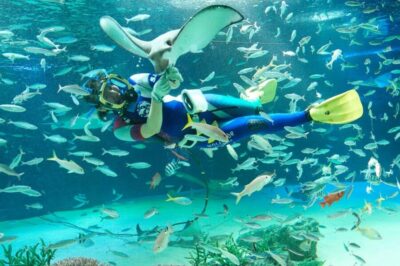
<1Dya Tour>Churaumi Aquarium, Cape Manzamo, American Village
Read our review →Browse the lists this tour appears in